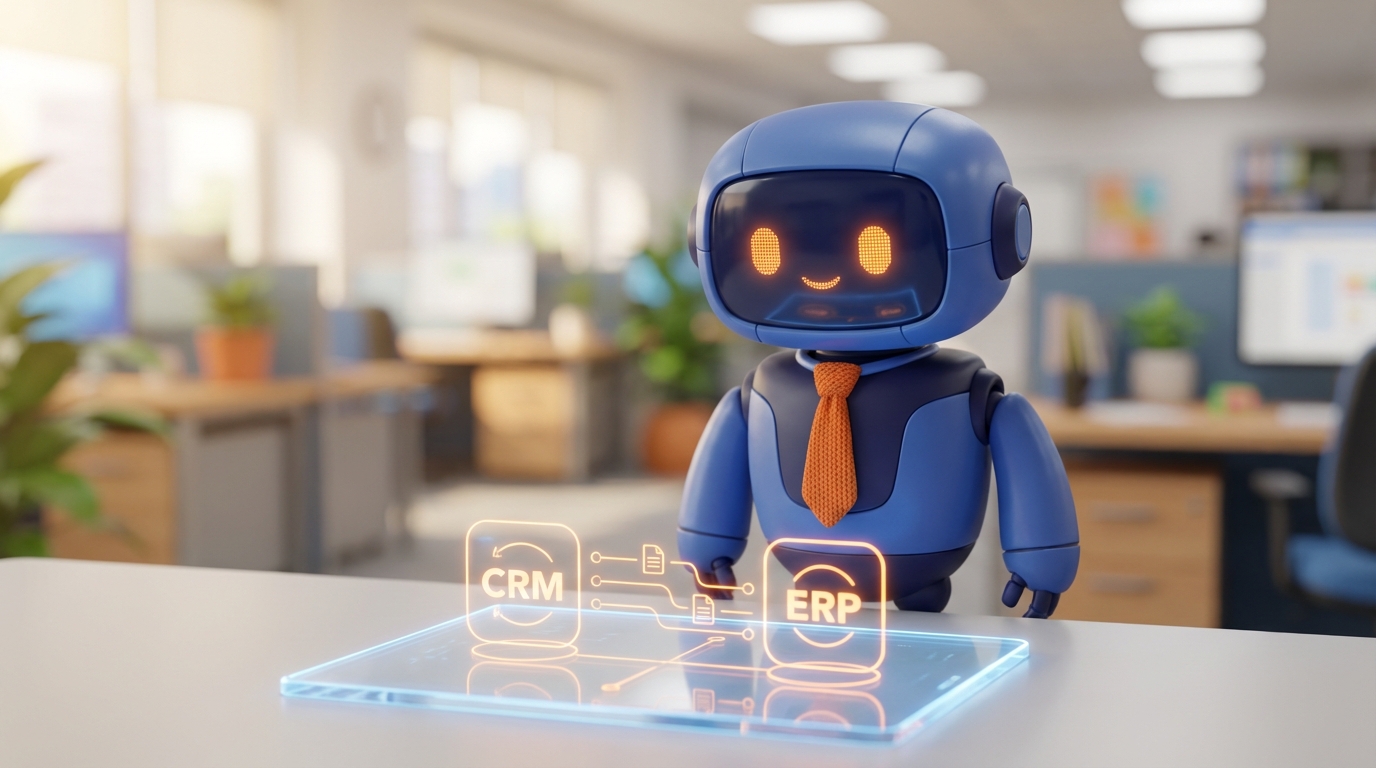
The power of AI agents lies not only in what they can do independently, but in how well they work with your existing systems. CRM and ERP integrations are crucial: they give your agent context, data, and execution capabilities.
Why CRM and ERP Integration is Essential
Without integration, an AI agent is an island. With integration, it becomes a central hub that retrieves data, executes actions, and orchestrates processes, all in real time.
Popular Integrations
- Salesforce: update leads, create opportunities, schedule follow-up tasks
- HubSpot: enrich contacts, advance deals, trigger email sequences
- SAP / Microsoft Dynamics: process purchase orders, check inventory, validate invoices
- Pipedrive: update sales pipeline based on customer behavior
- NetSuite / Odoo: automate financial and operational workflows
Integration Methods
- Native connectors: many AI agent platforms offer ready-made integrations
- REST API: direct connection via API keys or OAuth
- Middleware (Zapier, Make, n8n): visual workflows without code
- Webhooks: real-time data passing on events
- iPaaS platforms: enterprise-grade integration for complex environments
Best Practices for Successful Integration
- Start with one system and one use case, don't connect everything at once
- Set clear read and write permissions for the agent
- Validate data before the agent makes changes
- Log all actions for audit trail and troubleshooting
- Test extensively in a sandbox environment before go-live
Conclusion
Integration is not a side note, but the core of a successful AI agent deployment. The better the agent is connected to your existing systems, the more value it delivers, and the faster the ROI becomes visible.