
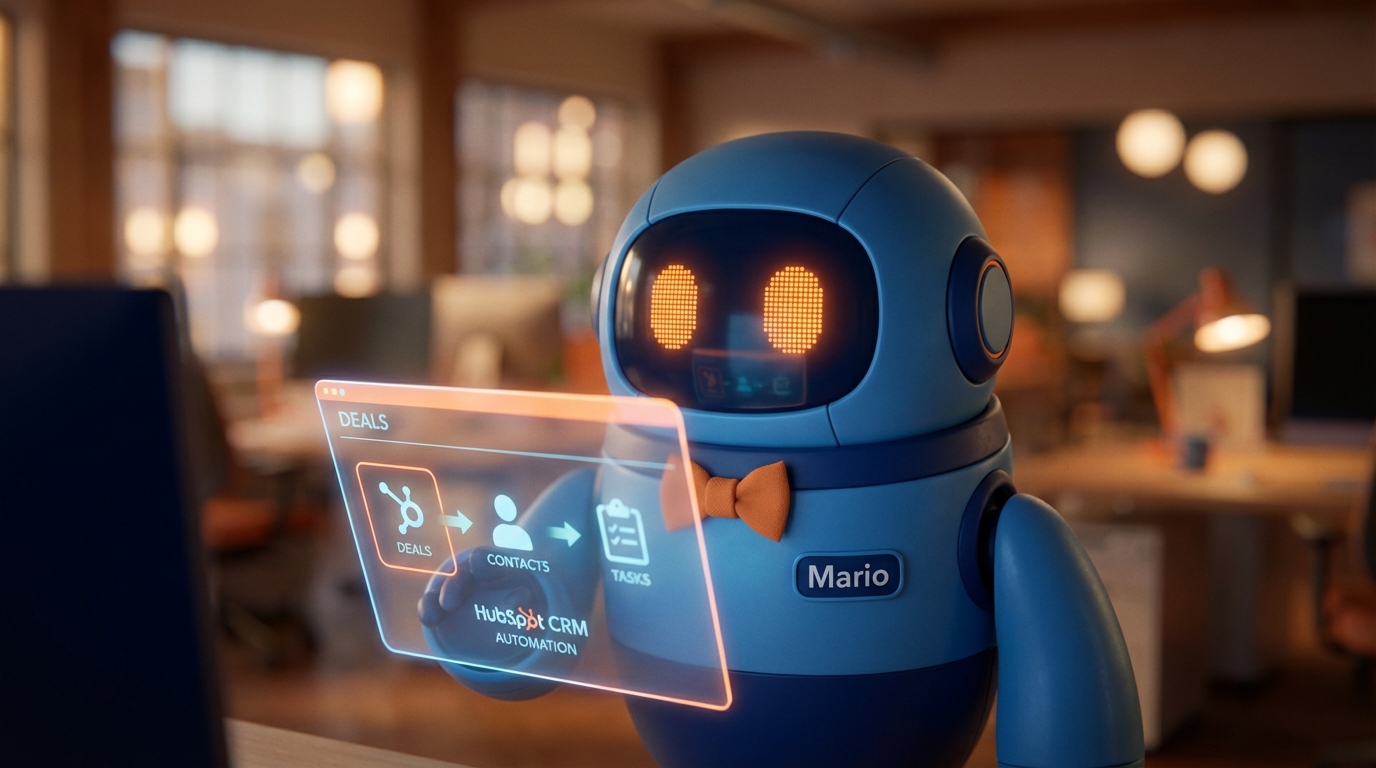
In the fast-evolving world of sales and marketing, HubSpot is shifting from a traditional CRM platform to an intelligent ecosystem powered by AI agents. These autonomous assistants do more than take tasks off your hands - they fundamentally change how organizations interact with prospects and customers.
What are HubSpot AI Agents?
HubSpot AI Agents are intelligent software assistants that can operate independently within your CRM environment. As an example, an AI agent can carry out complex workflows such as lead qualification, contact segmentation, and personalized follow-up campaigns - all without human intervention.
AI agents do not just handle data - they understand context, intent and timing to take meaningful business actions.
Core functionalities of AI agent in HubSpot
The AI agent integrates seamlessly with HubSpot's APIs and databases to perform a wide range of tasks:
- Intelligent Lead Scoring: the AI agent analyzes behavioral data, company information and interaction patterns to automatically score and prioritize leads
- Dynamic Content Personalization: Creates personalized email campaigns based on individual prospect profiles
- Predictive Pipeline Management: Predicts deal probability and identifies at-risk deals before they are lost
- Automated Nurturing Sequences: Develops and executes complex, multi-touch nurturing campaigns
- Real-time Data Enrichment: Automatically enriches contact and company profiles with external data sources
Implementation Strategy
Successful implementation of AI agents in HubSpot requires a phased approach:
Phase 1: Data Audit & Cleanup The AI agent is only as good as your data quality. Identify and clean inconsistent data, duplicates and incomplete records before activating the agent.
Phase 2: Workflow Mapping Clearly define which processes the AI agent should automate. Start with repetitive, rule-based tasks before moving on to more complex, context-dependent decisions.
Phase 3: Progressive Training Train the AI agent gradually with historical data and feedback loops. Modern AI agents learn from every interaction and improve their performance over time.
Measurable Business Impact
Organizations that have successfully implemented AI agents report, on average:
- 40% reduction in administrative tasks for sales teams
- 65% improvement in lead response time
- 25% increase in deal conversion rates
- 80% time savings on repetitive CRM tasks
- 30% improvement in customer lifetime value through better nurturing
Common Implementation Challenges
While powerful, AI agent implementation also comes with challenges:
Data Privacy & Compliance: Make sure the AI agent complies with GDPR requirements and your organization’s privacy policy. Implement proper consent management and data retention policies.
Change Management: Teams need time to get used to AI assistance. Provide adequate training and clear communication about the AI agent's role.
Integration Complexity: HubSpot's ecosystem is complex. Carefully plan which third-party integrations the AI agent should support.
The Future of CRM Automation
AI agents are only the beginning of intelligent CRM automation. Future developments will likely include:
- Predictive Customer Journey Mapping: the AI agent will be able to predict and optimize complete customer journeys
- Advanced Sentiment Analysis: Real-time emotional intelligence in customer communications
- Cross-Platform Orchestration: Seamless integration between HubSpot, email, social media and other channels
- Autonomous Deal Negotiation: AI agents that can conduct basic contract negotiations
Organizations that invest in AI agent technology now position themselves as early adopters in a market that is rapidly evolving toward full sales & marketing automation.
Sources & further reading

Written by
Chris de Graaf
Mede-eigenaar
Achtergrond in commercie en conversie. Bij Match-AI helpt hij bedrijven om van meetings en leads naar concrete, geautomatiseerde opvolging te komen.
Follow on LinkedIn
