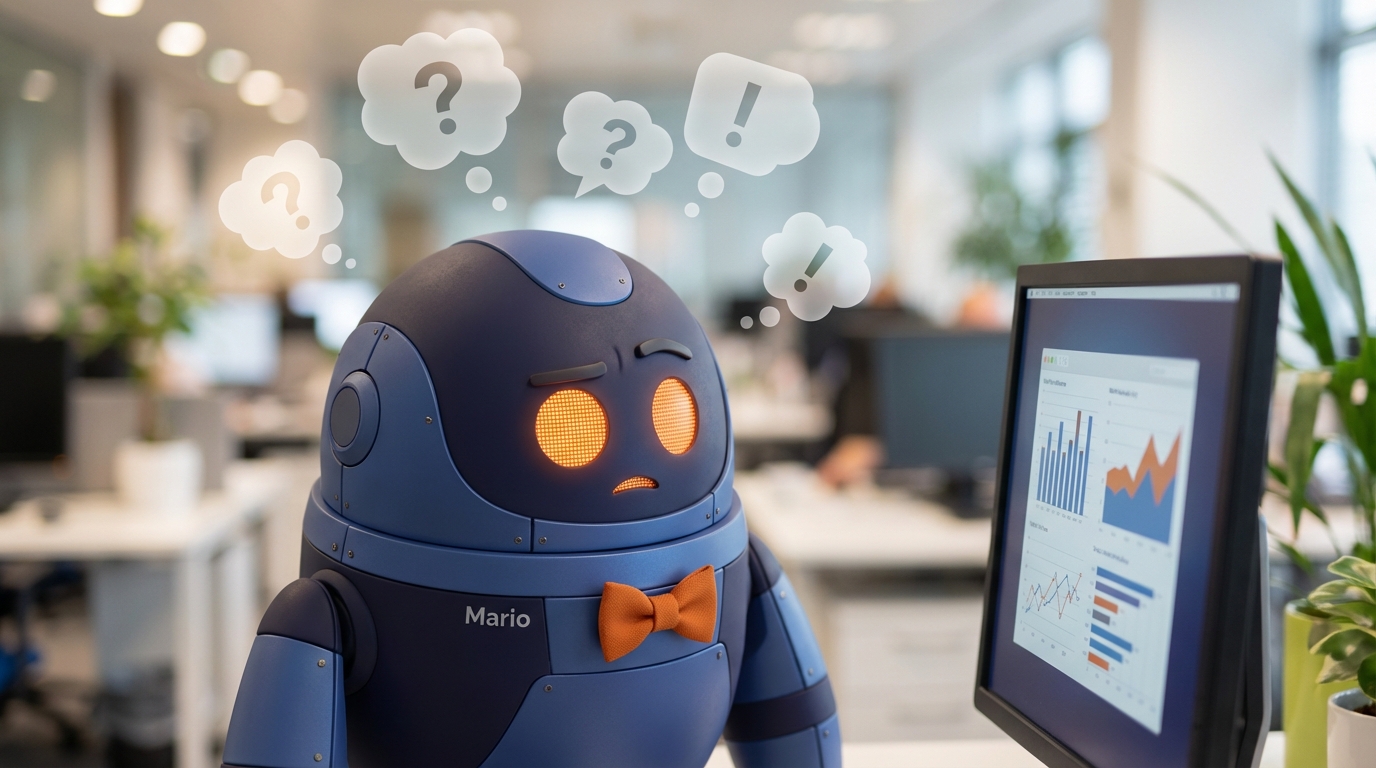
A generic AI model knows a lot about the world, but nothing about your product, your customers, or your internal processes. RAG, Retrieval-Augmented Generation, is the bridge between generic AI intelligence and domain-specific business knowledge.
What is RAG?
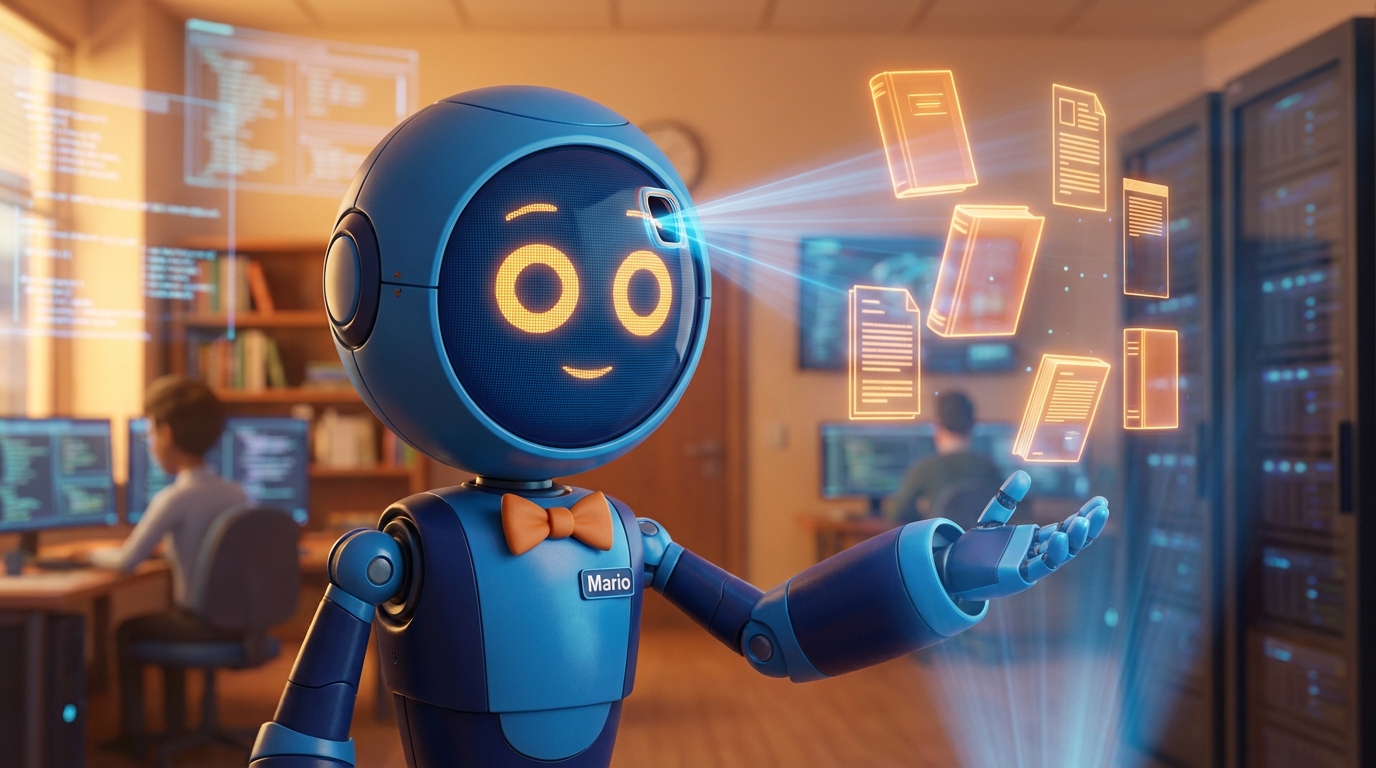
RAG is a technique where an AI model, when generating an answer, doesn't just rely on its training data but actively retrieves relevant information from an external knowledge base, PDFs, a CRM, an intranet, or a database.
How Does it Work in Practice?
- Step 1, Indexing: business documents are stored as vector representations in a vector database
- Step 2, Retrieval: for a question, the system finds the most relevant passages in the vector database
- Step 3, Augmentation: the found passages are provided as context to the language model
- Step 4, Generation: the model generates an answer based on both its training knowledge and the retrieved context
Why RAG for B2B AI Agents?
- Up-to-date information: the knowledge base can be updated in real-time without retraining the model
- Source attribution: the agent can reference the exact source of its answer
- Privacy: business data stays in your own infrastructure
- Precision: answers are based on your specific context, not generic web knowledge
- Cost savings: fine-tuning is expensive; RAG is scalable and cheaper
Conclusion
RAG is the technology that turns a generic AI into a domain expert, without risking your data and without the enormous costs of fine-tuning. For B2B AI agents working with internal knowledge, products, or customer data, RAG is almost always the recommended architecture.