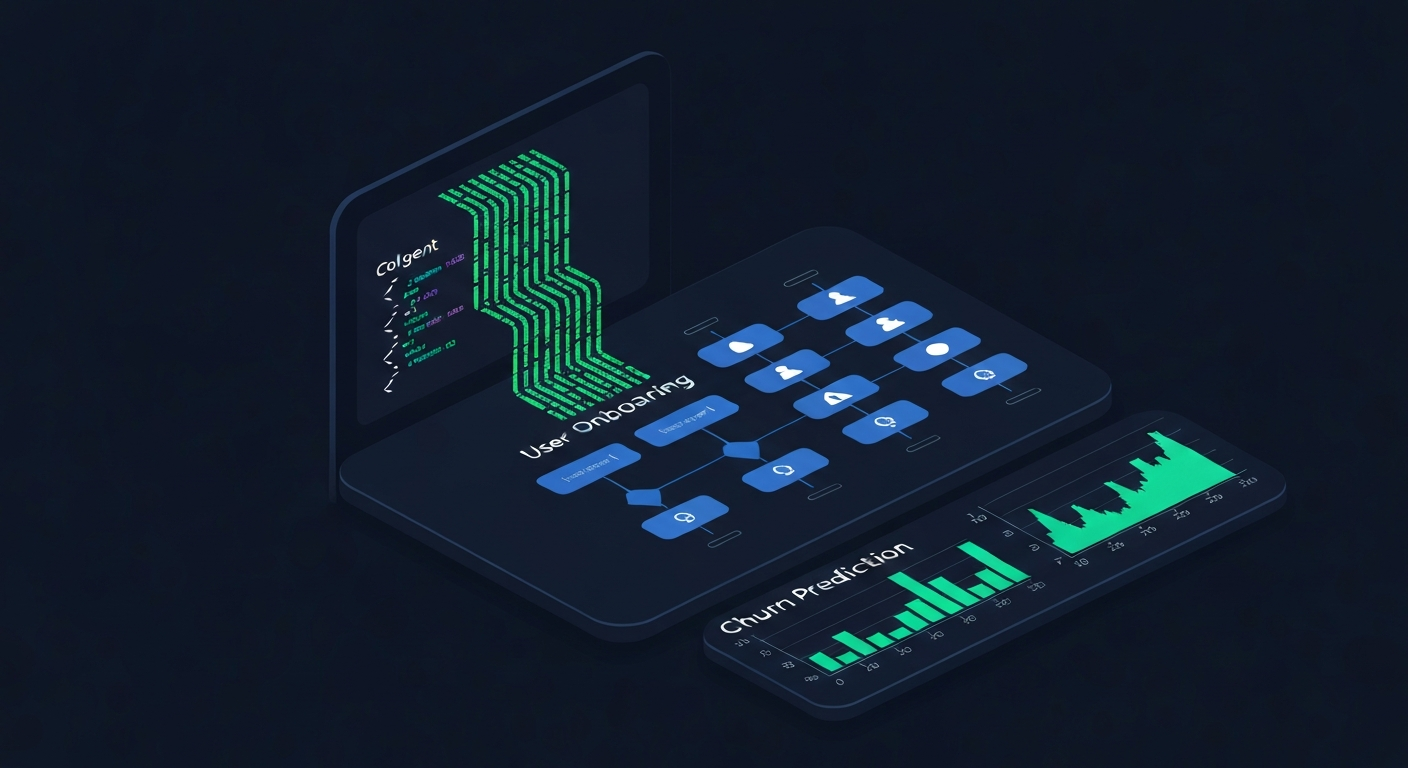
Autonomous AI agents are the most transformative technology for B2B companies right now. Where traditional AI helps you with one question at a time, autonomous AI agents carry out complete workflows, independently, purposefully, 24/7. In this complete guide, you will learn everything you need to know to understand, evaluate, and successfully implement AI agents in 2025.
What Are Autonomous AI Agents?
An autonomous AI agent is a software system that independently pursues goals by planning and executing a series of actions, using tools and data sources, and learning from the results. Unlike a chatbot that only provides answers, an AI agent can actually do things: send emails, look up data, fill out forms, generate reports, and make complex decisions based on context.
An autonomous AI agent is not a tool you use, it is an employee who works for you.
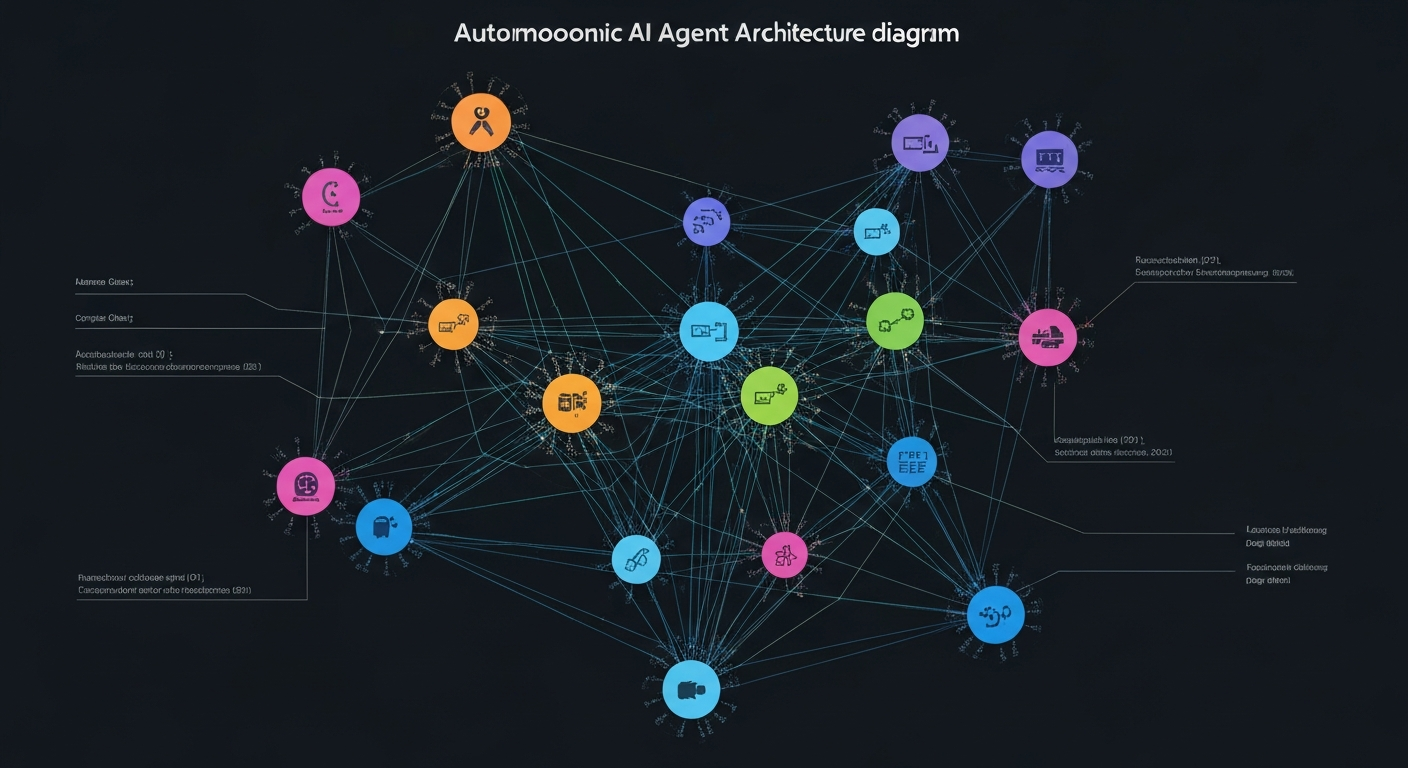
The Architecture of an AI Agent: 5 Core Elements
1. Perception (Observing) An AI agent takes in information from its environment: emails, databases, APIs, websites, documents, sensors. The more and better input sources it has, the better the agent can act.
2. Reasoning The agent's brain, usually a Large Language Model (LLM) such as GPT-4 or Claude, processes the input information, analyses the situation, and determines which action is the right one to achieve the goal.
3. Planning For complex tasks, the agent creates a step-by-step plan: which tools do I use, in what order, what do I do if step X fails? This is what sets autonomous agents apart from simple automation.
4. Action The agent carries out actions through tools: calling APIs, executing code, sending emails, querying databases, reading and writing documents. The quality and breadth of the available tools determine what the agent can achieve.
5. Memory An effective AI agent remembers what it has done, learned, and decided, both within a task (short-term memory) and over time (long-term memory). This allows it to learn and keep improving.
Types of AI Agents: From Simple to Complex
- Reactive Agents: Respond to specific triggers and carry out fixed tasks. Example: an agent that automatically replies to standard support questions.
- Deliberative Agents: Plan multiple steps ahead and take context into account. Example: an agent that coordinates an entire sales process.
- Learning Agents: Improve themselves based on feedback and results. Example: an agent that optimises its outreach strategy based on reply rates.
- Multi-Agent Systems: Multiple specialised agents working together. Example: a prospecting agent, outreach agent and qualification agent that together build a lead pipeline.
The 10 Most Important Use Cases for AI Agents in B2B
- Sales prospecting and outreach automation
- Lead qualification and CRM management
- Customer service and support triage
- Content creation and marketing automation
- Invoice processing and finance administration
- HR recruitment and candidate screening
- Supply chain monitoring and procurement optimisation
- Compliance monitoring and reporting
- Competitor intelligence and market analysis
- Internal knowledge management and onboarding
Implementation: How Do You Start with AI Agents?
The most successful AI agent implementations follow a proven approach:
Phase 1: Process Mapping and Use Case Selection Identify the processes in your organisation that take the most time, are the most repetitive, and have the clearest, measurable outputs. Those are the best candidates for a first AI agent. As a first use case, avoid processes that have many exceptions or depend heavily on human judgment.
Phase 2: Data and Integration Audit An AI agent is only as good as the data and tools it has access to. Make sure the relevant data is available, clean, and accessible through APIs. Identify which systems (CRM, ERP, email, etc.) the agent needs to be able to work with.
Phase 3: Pilot and Validation Start with a limited pilot, one use case, limited volume, intensive human monitoring. Measure output quality, identify errors and improvement points, and refine the agent before you scale.
Phase 4: Scalability and Expansion After a successful pilot, you can increase volume and expand the agent with more tasks and integrations. The best teams gradually build an ecosystem of specialised agents that work together.
The ROI of AI Agents: What Can You Expect?
The ROI of AI agents varies significantly by use case and sector, but the patterns are consistent:
- Sales agents: 200-400% more pipeline, 30-50% higher conversion
- Support agents: 50-70% fewer tickets, 40% higher customer satisfaction
- Finance agents: 70-90% time savings on routine tasks, 99%+ accuracy
- Marketing agents: 3-5x more content output, 40% lower cost per lead
- HR agents: 60-80% faster recruitment cycles, better candidate matching
The Future of AI Agents in 2025 and Beyond
2025 is the year when autonomous AI agents become mainstream for B2B companies. The technology is proven, the tools are mature, and the ROI cases are documented. Companies that start with AI agents now build a lasting competitive advantage that is hard for laggards to catch up with.
The next wave, agentic AI ecosystems with dozens of specialised agents working together seamlessly, is already being developed by the most forward-thinking organisations. This will fundamentally change the way B2B companies operate: less manual work, better decisions, higher speed, and greater scale.
Want to know where your organisation stands on the AI agent maturity curve, and what the next step is? [Take the Match-AI Maturity Assessment](/ai-maturity-quiz) or [schedule a conversation directly](/contact).
Sources & further reading

Written by
Chris de Graaf
Mede-eigenaar
Achtergrond in commercie en conversie. Bij Match-AI helpt hij bedrijven om van meetings en leads naar concrete, geautomatiseerde opvolging te komen.
Follow on LinkedIn